

Visual storytelling outperforms text-only marketing because of the picture superiority effect — the brain encodes and recalls images faster and more durably than words. In practice, that means a well-built visual narrative gets remembered longer, communicates complex ideas faster, and builds a stronger emotional connection than the same message written out in paragraphs.
The Picture Superiority Effect, Explained
The picture superiority effect is a well-documented finding in cognitive psychology: people remember images significantly better than the equivalent information presented as text. A few reasons this happens matter directly for marketing:
- The brain processes visual information holistically, as a single scene, rather than decoding it piece by piece the way it has to with text
- Images carry emotional weight more efficiently, and emotional encoding is one of the strongest predictors of long-term memory
- A single visual can compress an idea that would take several sentences to explain in words
None of this means text doesn’t matter — copy still carries precision and detail visuals can’t. It means the visual layer of a campaign is doing measurable cognitive work, not just decoration.
Why This Matters More in 2026, Not Less
It’s tempting to assume that AI-generated content has made visuals cheaper and therefore less valuable. The opposite is closer to true. As the volume of generic, AI-produced visual content floods every feed, distinctive, well-crafted visual storytelling stands out precisely because most of what surrounds it doesn’t. Attention is scarcer than ever, and a strong visual narrative is one of the few remaining ways to earn a second look in a feed built to reward the first.
The Core Elements of a Visual Narrative That Actually Works
Strong visual storytelling isn’t about having the biggest production budget. It comes down to three elements working together:
A clear message. If the story requires a caption to explain what’s happening, the visual isn’t doing its job. The idea should land before the viewer reads a single word.
A deliberate aesthetic. Color, composition, and style aren’t decoration — they set the emotional register before the content is even processed consciously. Blue reads as trustworthy and calm; red reads as urgent; clean, uncluttered layouts read as credible.
A structure with an arc. Even a six-second clip can have a beginning, a shift, and a resolution. Stories with a shape are more memorable than a sequence of disconnected, pretty images.
Real Campaigns That Show How This Plays Out
A few well-known examples illustrate the pattern, not as templates to copy, but as proof of the mechanism:
Coca-Cola’s “Share a Coke.” Personalizing bottles with common first names turned a mass product into something people wanted to photograph and share, converting a simple packaging change into a social media phenomenon built entirely on the visual of seeing your own name on a bottle.
Nike’s “Dream Crazy” campaign. Built around Colin Kaepernick, the campaign used a striking, minimal visual style paired with a clear point of view. It generated significant controversy and significant loyalty at the same time — a reminder that strong visual storytelling doesn’t have to be universally comfortable to be effective, only clear about what the brand stands for.
Airbnb’s “One Less Stranger.” By blending user-generated content with a consistent visual narrative, Airbnb turned individual travelers’ experiences into a larger story about connection, reinforcing the brand’s core promise through real people rather than polished actors.
As marketer and cartoonist Tom Fishburne has put it, the best marketing doesn’t feel like marketing at all. Each of these campaigns worked because the story came first and the brand message rode along inside it, rather than the other way around.
Applying This to B2B, Not Just Consumer Brands
Visual storytelling gets talked about mostly in a consumer context, but it applies just as directly to B2B — the visuals just do different work. A B2B audience isn’t looking for an emotional ad; they’re looking for confidence that a complex claim is true. That means the highest-leverage visual formats in B2B are:
- Product demo videos that show a system working in a real or realistic environment
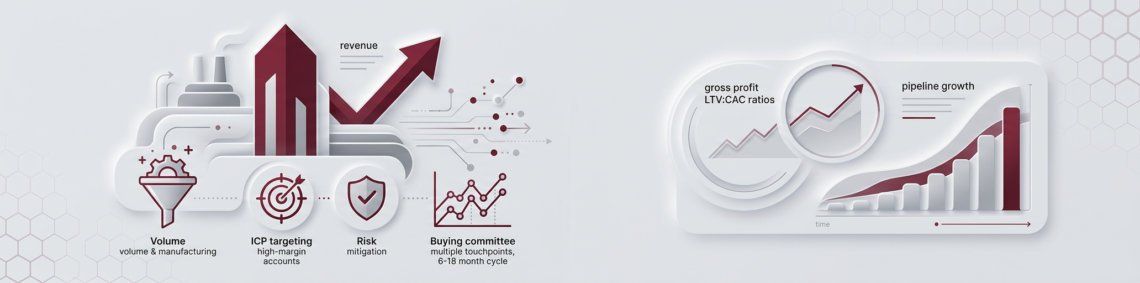
- Data visualizations that make a performance claim instantly legible instead of buried in a paragraph
- Customer video testimonials, which combine the credibility of social proof with the retention benefits of visual storytelling
The emotional register is different from a consumer campaign, but the underlying mechanism — image over text, structure over a list of features — is identical.
Platform Differences Still Matter
The same story doesn’t perform the same way on every platform, because the audience’s expectations shift by context:
| Platform | What Performs | Audience Expectation |
| Instagram / TikTok | Short-form video, Reels, Stories | Fast-paced, visually polished, entertainment-forward |
| Native video, carousels, data-driven graphics | Professional, informative, credibility-focused | |
| YouTube | Longer-form video, product walkthroughs | Depth, patience for detail, search-driven discovery |
Building one asset and reformatting it for every platform without adjusting pacing or tone is one of the most common ways visual storytelling underperforms — the story might be strong, but it’s speaking the wrong dialect for where it’s showing up.
Measuring Whether It’s Actually Working
Visual storytelling should be measured like any other marketing investment, not treated as an act of faith. The signals that matter:
- Engagement rate relative to your account or campaign baseline, not an industry average
- Watch time and completion rate for video, which tell you whether the story held attention past the first few seconds
- Assisted conversions — whether visual content shows up in the path to a sale or sign-up, even if it isn’t the last click
If a piece of visual content gets strong views but no downstream engagement, the visual is working and the story isn’t connecting it back to a next step — a production problem, not a strategy problem.
Don’t Skip Accessibility
A visual story that only reaches sighted users with fast connections is leaving reach on the table. Alt text for images and captions for video aren’t compliance checkboxes — they extend the story to a meaningfully larger audience, including the growing share of video that gets watched on mute.
FAQ
What is visual storytelling in marketing?
Visual storytelling is the use of images, video, and design to communicate a brand message or narrative, relying on visual composition and structure rather than text alone to create understanding and emotional connection.
Why are visuals more effective than text alone?
Because of the picture superiority effect — the brain processes and remembers images faster and more durably than the equivalent text, making visual content more memorable and easier to act on.
Does visual storytelling work for B2B marketing?
Yes. B2B visual storytelling looks different from consumer campaigns — product demos, data visualizations, and customer testimonials rather than emotional brand films — but the underlying advantage in memorability and clarity is the same.
How do you measure the success of visual storytelling?
Track engagement rate against your own baseline, video watch time and completion rate, and assisted conversions — whether visual content shows up in the path to an eventual sale or sign-up.
The Bottom Line
Visual storytelling isn’t a soft skill or a nice-to-have layer on top of “real” marketing — it’s a direct response to how human memory actually works. The brands that use it well aren’t necessarily spending the most; they’re the ones who understand that a clear message, a deliberate look, and a real structure will beat a technically polished but forgettable visual every time.
Written by Jeff Javierto, growth marketing director.